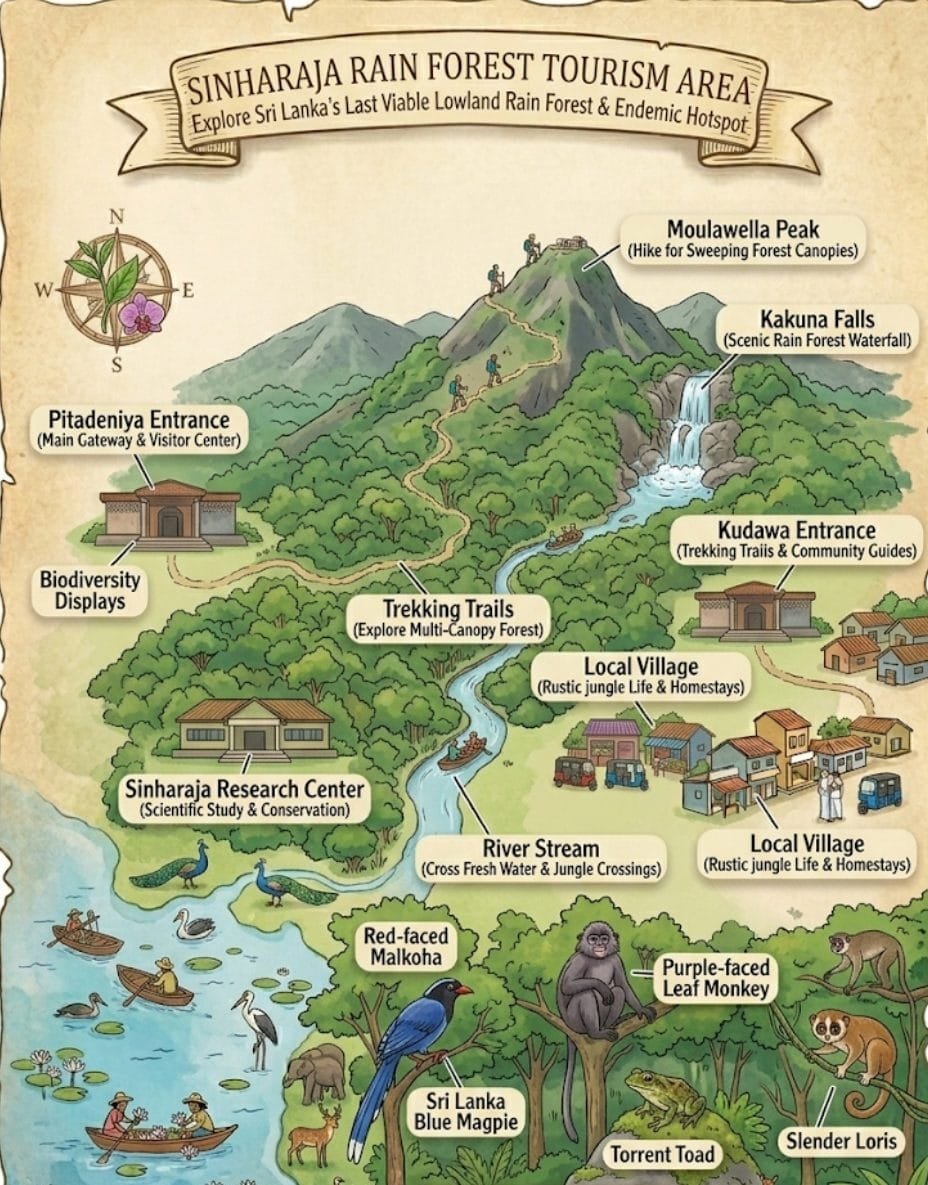

Sinharaja
The last viable area of primary tropical rainforest in Sri Lanka. A UNESCO World Heritage Site and a global biodiversity hotspot bursting with endemic birds, lush flora, and hidden waterfalls.
About Sinharaja Forest Reserve
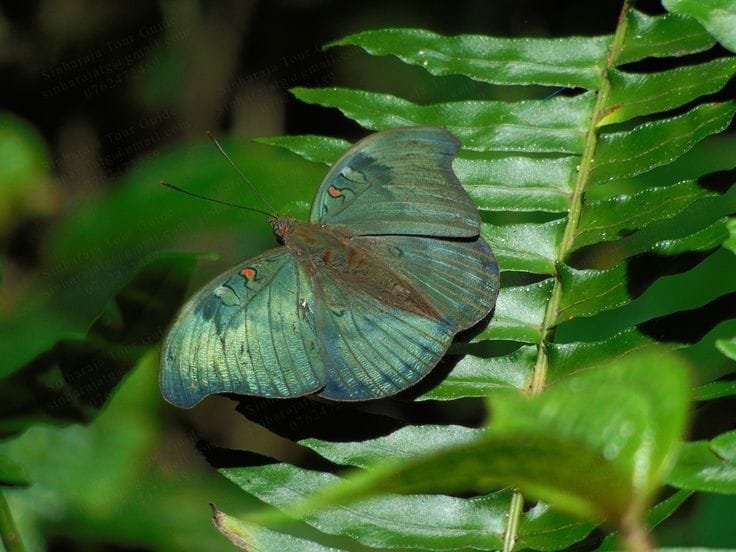
Translating to "Lion Kingdom," Sinharaja is a treasure trove of endemic species. Located in the south-western part of the island, this dense, humid, and mysterious rainforest spans over 11,000 hectares. More than 60% of its trees are endemic, and it is home to a staggering array of wildlife, including insects, amphibians, reptiles, and over 50% of Sri Lanka's endemic species of mammals and butterflies. For nature lovers and bird watchers, trekking through the misty trails of Sinharaja is an absolute dream come true.
Top Experiences & Wildlife Highlights
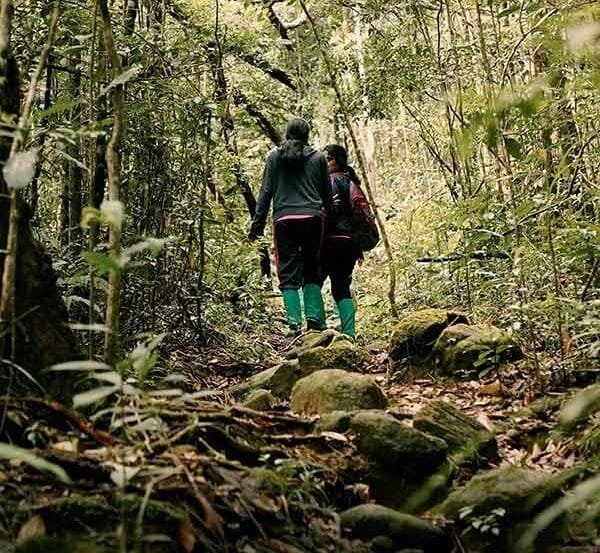
Rainforest Trekking
Immerse yourself in nature. Accompanied by an expert forest guide, trek through the dense canopy along the main trails (like the Kudawa or Deniyaya entrances) to spot unique flora and fauna.
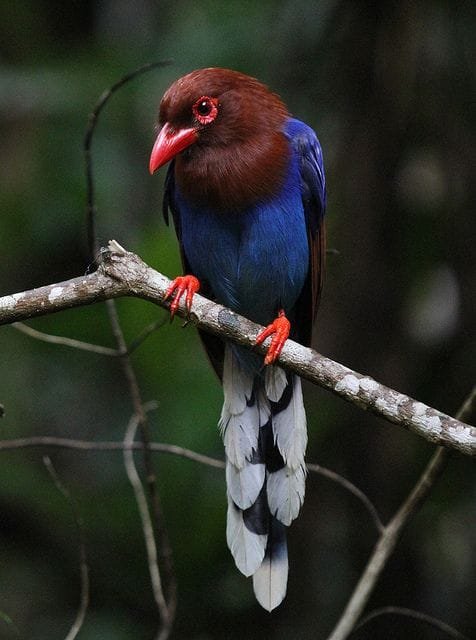
World-Class Bird Watching
Sinharaja is famous for "mixed feeding flocks," where different bird species travel and feed together. Keep an eye out for the Sri Lanka Blue Magpie, Red-faced Malkoha, and the Green Pit Viper.
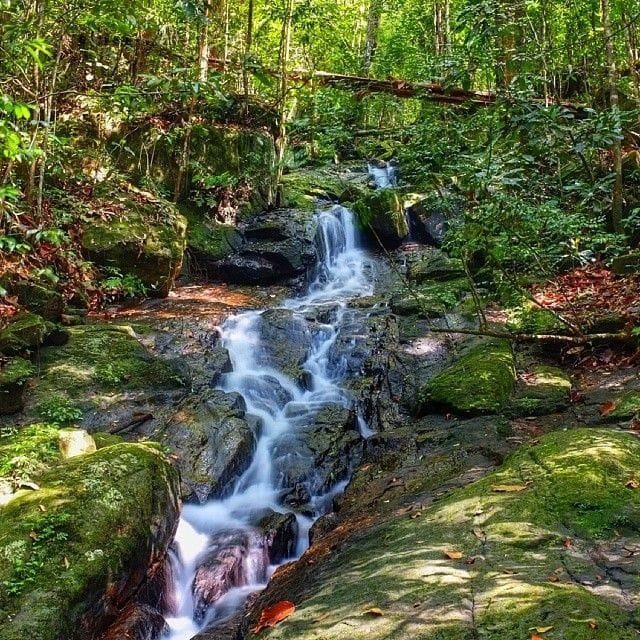
Hidden Waterfalls & Streams
The forest is crossed by a network of crystal-clear streams and beautiful waterfalls, such as Doowili Ella and Brahmana Ella. Taking a dip in these natural, unpolluted pools is incredibly refreshing.
Amphibian & Reptile Spotting
For macro photography enthusiasts, Sinharaja offers a close-up look at colorful tree frogs, unique lizards, exotic butterflies, and harmless green pit vipers resting on low branches.
Frequently Asked Questions
Wear light, breathable clothing, comfortable hiking shoes, and carry a light raincoat. **Important:** Leeches are very common in the rainforest! We highly recommend bringing "leech socks," salt, or insect repellent.
Yes, it is mandatory to take a registered local tracker/guide when entering the reserve. Not only do they keep you safe from getting lost, but their expert eyes will help you spot perfectly camouflaged animals and birds.
Being a rainforest, it can rain at any time! However, the relatively drier months from August to September, and from January to early April, are the best times for trekking and bird watching.
Plan Your Eco-Tour with Crown Tours
Getting to the entrances of Sinharaja (Kudawa or Deniyaya) involves navigating narrow village roads. Hire a reliable taxi and an experienced driver to get you there safely.
Destination Details
- Sabaragamuwa / Southern Province
- Famous for: Rainforest & Endemic Birds
- ~120 km from Colombo
- Humid & Wet (20°C - 25°C)