
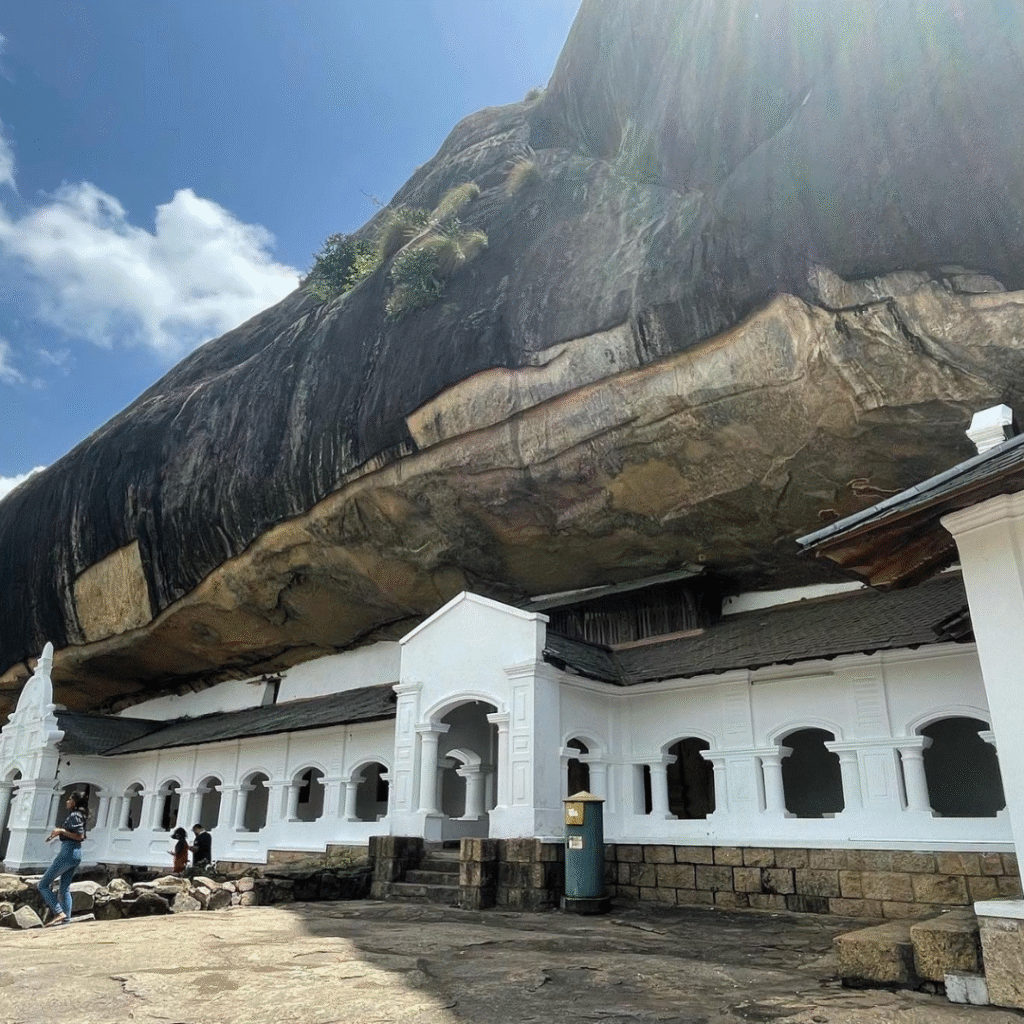
Dambulla, a vibrant town nestled in the heart of Sri Lanka’s Cultural Triangle, is not just a stopover—it’s the essential base for exploring the island’s most magnificent historical sites. Dominated by the soaring granite monolith that houses the Dambulla Cave Temple, this destination offers a powerful blend of ancient art, religious history, and unrivaled panoramic views.
If you’re planning a trip to the Cultural Triangle, this definitive travel guide covers everything you need to know, from climbing the Golden Temple of Dambulla to exploring the nearby UNESCO treasures.
The Dambulla Cave Temple (also known as the Rangiri Dambulla Cave Temple) is a UNESCO World Heritage Site and the largest, best-preserved cave-temple complex in all of Sri Lanka. For over two millennia, this site has been a sacred pilgrimage location, preserving astonishing works of art and sculpture.
Perched 160 meters above the surrounding plains, the complex consists of five main sanctuaries carved into the rock face. They contain a staggering collection of Buddhist artwork:
| Cave Name (Local/English) | Key Features |
| Cave 1: Devaraja Lena (Cave of the Divine King) | Dominated by a stunning 14-meter-long Reclining Buddha statue, carved out of the solid rock. |
| Cave 2: Maharaja Lena (Cave of the Great Kings) | The largest cave, housing 50+ statues, including those of ancient kings and deities like Vishnu and Ganesha, alongside the magnificent 18th-century murals covering the walls and ceilings. |
| Cave 3: Maha Alut Viharaya (Great New Temple) | Features a large number of seated and standing Buddha figures and murals commissioned by King Kirti Sri Rajasinha. |
| Caves 4 & 5 | Smaller but equally important caves, featuring unique statue styles and dedicated to different periods of the temple’s history. |
The dazzling, intricate murals found across the five caves cover an area of 2,100 square meters, vividly depicting scenes from the Buddha’s life, making the Golden Temple of Dambulla an exceptional showcase of South Asian religious art.
The Climb: The entrance is marked by the majestic Golden Temple of Dambulla (a Buddhist Museum) and a massive Golden Buddha statue at the base. You’ll need to climb around 350 moderate steps up the granite rock to reach the cave complex.
Best Time to Visit: Visit early morning (7:00 AM) or late afternoon (4:00 PM onwards) to avoid the intense midday heat and the biggest crowds. The views at sunset are spectacular!
Tickets: Purchase your tickets at the counter at the base before beginning your climb. Note: You must present your ticket at the top.
Dress Code: As a sacred site, respectful attire is mandatory: knees and shoulders must be covered for both men and women. You must remove your shoes and hats before entering the cave complex itself (a small fee is charged for shoe storage).
Dambulla’s central location makes it the most convenient hub for day trips to Sri Lanka’s top ancient sites.
Sigiriya Lion Rock: This world-famous UNESCO rock fortress is an easy 30-minute drive from Dambulla. Plan an early morning visit to climb to the top of the ‘Eighth Wonder of the World’ before the heat sets in.
Pidurangala Rock: For the best sunrise views over Sigiriya, the scenic, budget-friendly climb up Pidurangala is highly recommended. Dambulla is the perfect place to base yourself for either hike.
One of the greatest natural spectacles in Asia, “The Gathering” of Asian Elephants at Minneriya National Park, is just a short drive from Dambulla. This park is the ideal destination for a thrilling jeep safari, particularly between July and October when hundreds of elephants congregate near the Minneriya Tank reservoir.
Polonnaruwa: Explore the vast, well-preserved ruins of Sri Lanka’s second great ancient capital, easily accessible via a day trip from Dambulla.
Popham’s Arboretum: A serene and unique local treasure, this is Sri Lanka’s only dry zone arboretum, offering nature walks and the chance to spot rare local wildlife.
The Dambulla Dedicated Economic Centre: Experience the vibrant, chaotic pulse of local commerce at Sri Lanka’s largest wholesale fruit and vegetable market. It’s a wonderful place to sample local produce and capture colorful photos.
Accommodation: Dambulla offers a range of stays, from basic guesthouses for backpackers to luxury resorts near the Kandalama Reservoir.
Transport: The town is a major bus junction, making it easy to travel to Kandy, Anuradhapura, or Trincomalee. Tuk-tuks are the primary mode of transport for short trips to the Cave Temple and Sigiriya.
Whether you’re drawn by the two millennia of religious history preserved in the magnificent Dambulla Cave Temple or the desire to stand on top of Sigiriya Rock, Dambulla is the critical anchor point for any journey through Sri Lanka’s Cultural Triangle.

Explore the beauty, culture, and adventure of Sri Lanka with our trusted local experts.
We create memorable and personalized travel experiences for every traveler.
Contact Us



Copyright © Crown Tours Sri Lanka. All Rights Reserved.
Designed by Return Zero Solutions
WhatsApp us