
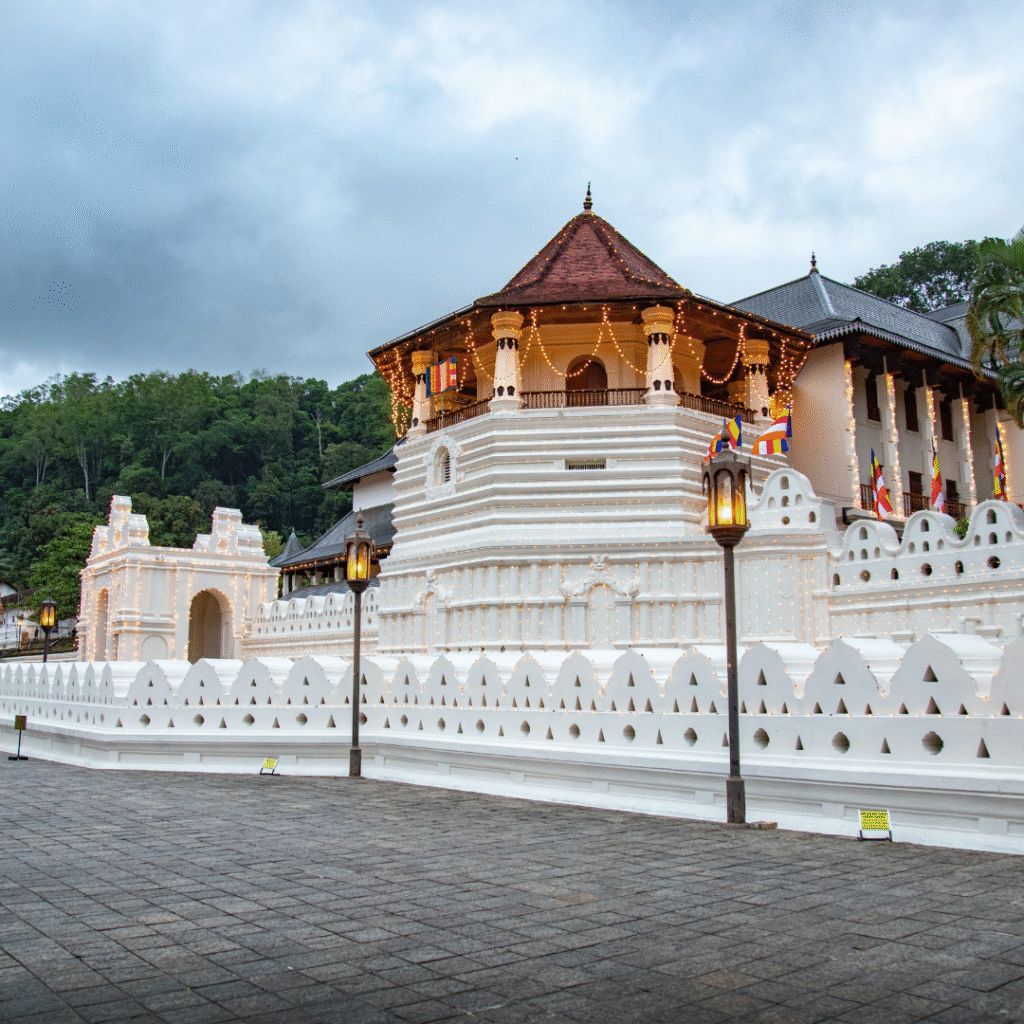
Sri Dalada Maligawa | A Deep Dive into Kandy's Sacred Temple of the Tooth Relic
The Temple of the Sacred Tooth Relic, or Sri Dalada Maligawa, in Kandy, Sri Lanka, is not merely a temple—it is the living heart of Sri Lankan Buddhist culture and a powerful symbol of national sovereignty. For centuries, this UNESCO World Heritage Site has safeguarded the most venerated object in the Buddhist world: a tooth relic of the Lord Buddha himself.
If you are planning a trip to the island’s cultural capital, a pilgrimage to this majestic site is an absolute must-do. Dive into the rich history, spiritual significance, and essential visitor tips for exploring this breathtaking landmark.
📜 A Relic's Journey: The History of the Sacred Tooth
The incredible story of the Sacred Tooth Relic (a left canine tooth of Gautama Buddha) begins in Kushinagar, India, after the Buddha’s cremation in the 6th century BCE.
-
Smuggled to Sri Lanka: In the 4th century CE, during a period of warfare in India, Princess Hemamala and Prince Dantha are said to have smuggled the tooth to Sri Lanka, hidden in the Princess’s hair.
-
Symbol of Sovereignty: Upon its arrival, a new tradition was established: whoever possessed the Sacred Tooth Relic held the legitimate right to rule the country. This made the relic the palladium of Sinhalese royalty, moving with the capital from Anuradhapura and Polonnaruwa until it finally settled in Kandy.
-
The Kandy Era: The present magnificent temple structure within the former royal palace complex was primarily built and embellished by the Kandyan kings in the 17th and 18th centuries, marking Kandy as the final and most significant home of the relic.
The fact that the Tooth Relic was considered the source of royal authority is what makes the Sri Dalada Maligawa so central to Sri Lankan history and governance.
✨ Architectural and Cultural Grandeur
The Temple of the Tooth Relic is a masterwork of traditional Kandyan architecture, renowned for its intricate carvings, frescoes, and a deep, spiritual atmosphere.
-
The Inner Shrine: The relic itself is not visible. It is housed in a golden stupa-shaped casket, which is nested within a series of seven ornate golden caskets studded with precious gems, located in the two-story inner shrine.
-
The Pattirippuwa (Octagonal Pavilion): This iconic octagonal tower overlooking the Kandy Lake was built by the last king of Kandy, Sri Vikrama Rajasinghe. It originally served as a platform for the king to address his subjects and now houses the temple’s library of ancient palm-leaf manuscripts.
-
Hevisi Mandapaya (Drummers’ Courtyard): This is where the temple’s traditional drummers and dancers perform during the daily Pooja ceremonies.
📜 The Spectacle of the Esala Perahera
If your visit aligns with July or August (dates vary based on the lunar calendar), you may be lucky enough to witness the Esala Perahera. This is arguably the most spectacular Buddhist festival in the world.
For ten nights, a grand procession featuring hundreds of beautifully adorned elephants, traditional dancers, drummers, and fire performers winds through the streets of Kandy. While the sacred tooth is no longer paraded (a replica casket is used), this festival is a dazzling display of Sri Lankan culture and devotion, attracting pilgrims and tourists from across the globe.